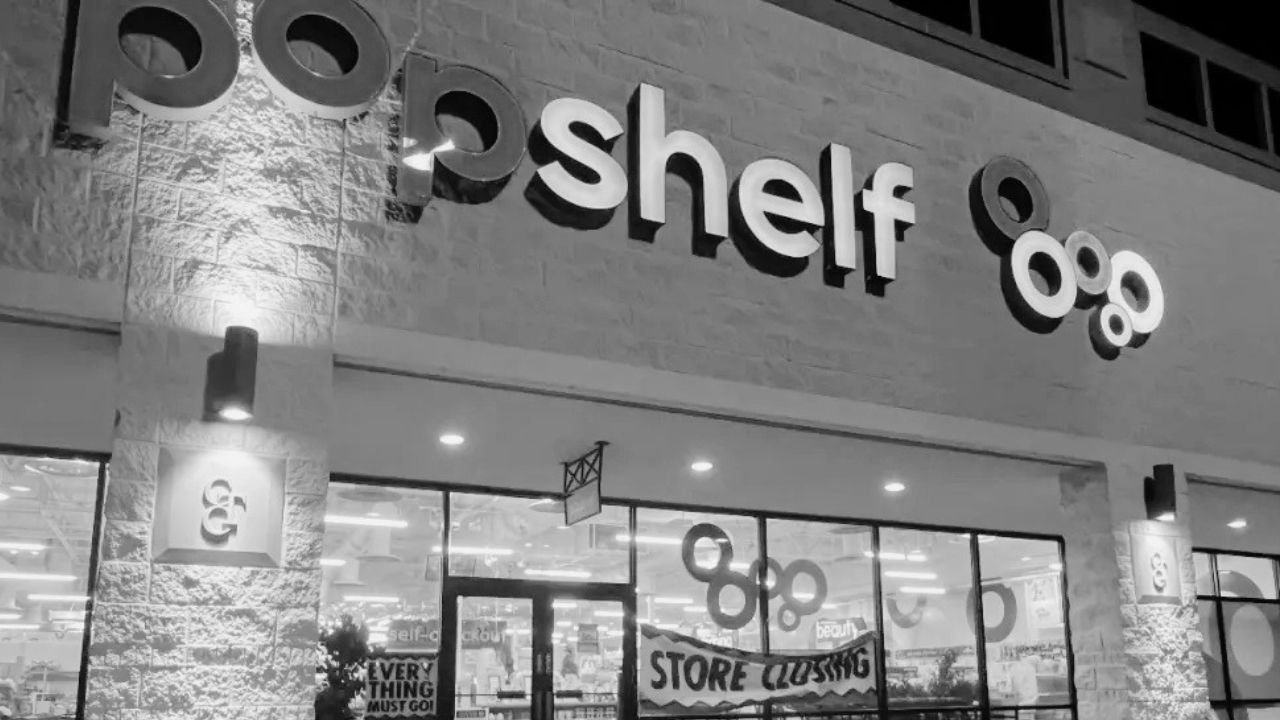
If you’ve seen headlines about pOpshelf store closures and started wondering whether the whole chain is shutting down, you’re not alone. The news can sound alarming at first glance. But the real story is a little more layered than “pOpshelf is dead.”
This article breaks down exactly what’s happening — how many stores are closing, why Dollar General made these decisions, what “conversion” actually means, and how to figure out if your local store is one of the affected ones.
The Short Answer — No, pOpshelf Is Not Shutting Down Completely
Let’s get straight to it: pOpshelf is not going out of business as a brand. No bankruptcy has been filed. There’s no full liquidation happening. The brand still exists and continues to operate across many locations.
What is happening is that Dollar General — the parent company behind pOpshelf — has closed and plans to close a select number of locations. This is a store portfolio review, not a brand-wide shutdown. There’s a big difference between trimming a store network and killing it entirely.
Think of it like a restaurant chain that closes a few locations that aren’t doing well, while keeping the rest open. The brand doesn’t disappear. It just gets smaller and more focused in certain areas.
What Dollar General Actually Announced
Here’s the specific plan Dollar General put on the table. The company announced it would close 45 pOpshelf stores and 96 Dollar General stores as part of a broader review of store performance. That’s a significant number, but it’s still a portion of the overall store network — not the whole thing.
On top of the closures, Dollar General also said it would convert six pOpshelf locations into Dollar General stores in the first quarter of fiscal year 2025. So those six locations aren’t simply shutting down — they’re changing format and staying open under a different name.
At the time of the announcement, the closures represented nearly 20% of pOpshelf locations. That’s a meaningful cut, and it makes sense that people are paying attention. But it still leaves the majority of pOpshelf stores open and running.
The company described the moves as part of a planned store footprint review — a way of looking at which locations are working and which ones aren’t, then making adjustments accordingly.
Why Some pOpshelf Stores Are Closing
The simple explanation is that not every store location performs the same way. Some stores are in spots that just don’t bring in enough customers to make sense financially. Others may be in areas where a different retail format — like a standard Dollar General — would actually serve shoppers better.
Dollar General has framed these closures as performance-based decisions, not a signal that the pOpshelf brand itself is failing across the board. Stores that weren’t pulling their weight, or that were in locations that didn’t match the pOpshelf concept well, were the ones flagged for closure or conversion.
It’s also worth remembering that pOpshelf launched in 2020. That makes it a relatively young retail concept. When a new store format rolls out, the first few years often involve some trial and error — figuring out which markets are the right fit and which ones aren’t. Pulling back from certain locations is a normal part of that refinement process.
Retail chains do this regularly. Pruning a few branches doesn’t kill the tree. It often helps the healthier parts grow stronger.
Which Locations Have Already Closed or Are Closing
Individual store closures have been reported across multiple states throughout 2025. Here are some confirmed examples:
- Grapevine, Texas — A pOpshelf location announced its upcoming closure after a company review.
- San Angelo, Texas — Described locally as part of a nationwide plan affecting selected locations.
- Houston area, Texas — Multiple Houston-area pOpshelf stores were affected by the 2025 closure plan.
- Fairview Heights, Illinois — Another confirmed closure using similar company language about a “thorough review.”
- Georgia — Additional closures reported in the state as part of the same plan.
What stands out across these reports is the consistent framing. Each closure is described as part of a nationwide review of selected locations — not a sign of total brand failure. The affected stores span different states and markets, which reflects a broad portfolio review rather than a regional pullback.
If you’re wondering about your own local pOpshelf store, the best approach is to check with the store directly or look for local news coverage in your area. The company hasn’t published a single public list of every closing location, so local reporting tends to be the most reliable source.
What “Conversion” Means for Some Stores
This part trips a lot of people up, so it’s worth explaining clearly. When a store is “converted,” it doesn’t simply close. The building stays open as a retail space — it just operates under a different brand and sells different things.
In this case, six pOpshelf locations are being turned into Dollar General stores. That means customers in those areas will still have a store to shop at. It just won’t look or feel like pOpshelf anymore. Instead of the fun, colorful, lifestyle-focused format that pOpshelf is known for, those spaces will shift to Dollar General’s familiar discount-grocery model.
Why would Dollar General do this? Likely because some locations are in neighborhoods that are a better fit for the Dollar General format — areas where shoppers are looking for everyday essentials and value pricing rather than the more curated, home-décor-and-fun-finds experience pOpshelf offers.
This kind of move actually shows that Dollar General is thinking strategically, not panicking. Instead of just shutting a store down and walking away, they’re asking: “What does this neighborhood actually need?” and adjusting accordingly.
Does This Mean pOpshelf Is Struggling as a Brand?
That’s a fair question, and it deserves an honest answer. The closures do suggest that pOpshelf has faced some challenges in certain markets. Closing nearly 20% of your locations is not a small thing.
At the same time, it doesn’t mean the concept is broken or that the remaining stores are next. Dollar General has not signaled any plans to shut down pOpshelf entirely. The brand is still being operated, and the remaining locations continue to serve customers.
For anyone researching this topic from a business angle, resources like Smart Business Base can be helpful for understanding how retail brands manage store networks and make strategic decisions during periods of change.
It’s also fair to say that the retail environment in general has been tough. Consumer spending habits shifted a lot after 2020, and newer retail concepts — including pOpshelf — are still figuring out how to position themselves in a market that keeps changing. That doesn’t automatically spell failure. It just means the brand is still finding its footing.
What to Do If You’re Worried About Your Local Store
If your nearest pOpshelf hasn’t announced anything, there’s no reason to assume it’s closing. The closures are tied to specific underperforming locations, not every store in every market.
Here’s what you can do to stay informed:
- Check for any signs posted in your local store about upcoming changes.
- Search for your city name plus “pOpshelf closing” in a search engine to see if local news has covered it.
- Follow your local news outlets, since they tend to report on store closures before the company makes a wide public announcement.
- You can also try reaching out to the store directly for the most current information.
The Bottom Line
pOpshelf is not going out of business. What’s actually happening is that Dollar General is making strategic decisions about which store locations are worth keeping and which ones aren’t serving customers or the business well enough.
Forty-five pOpshelf stores are closing, six are being converted into Dollar General stores, and the rest of the brand continues to operate. It’s a significant adjustment, but it’s not the end of the chain.
Retail brands go through this kind of review all the time. Some locations close, some change format, and the rest carry on. That appears to be exactly what’s happening here — not a brand collapse, but a business making calculated moves to stay on steadier ground.
Also Read: