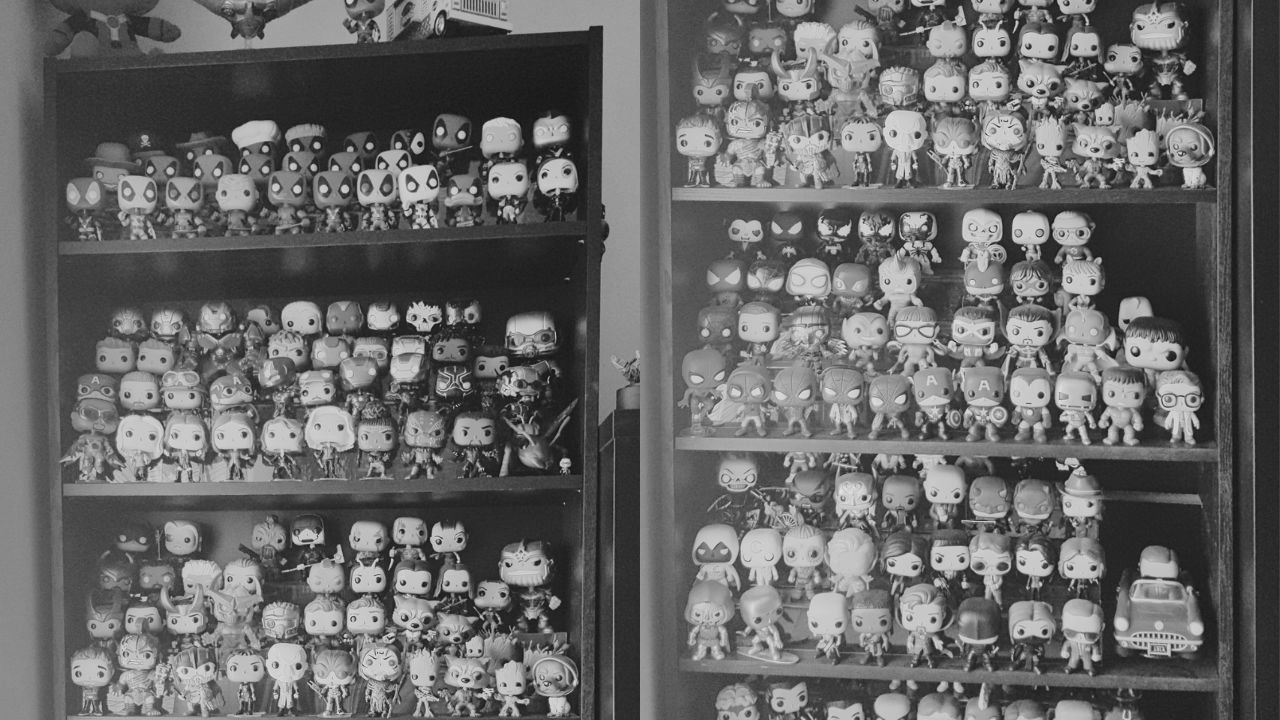
Funko’s own SEC filings contain a striking line: the company has expressed “substantial doubt about the Company’s ability to continue as a going concern for the next twelve months.” That’s a serious statement. It’s also one that’s been misread by a lot of people online as meaning Funko has already shut down or filed for bankruptcy.
It hasn’t. But the situation is genuinely serious, and it’s worth understanding what’s actually happening — especially if you’re a collector, a retailer who stocks Funko products, or just someone trying to separate real news from social media panic.
This article breaks down what the going concern warning actually means, what Funko’s numbers look like right now, how the company got here, and what realistically could happen next.
Funko Is Still Open — But Its Financial Warning Is Serious
As of the latest available filings, Funko has not filed for bankruptcy and has not closed its doors. Stores still carry its products. New figures are still being released.
What Funko has done is issue a formal going concern warning in its SEC filings. This is a specific accounting term that means the company’s auditors and management are not confident the business can meet its financial obligations over the next 12 months without significant changes.
Think of it like a doctor telling a patient: “Your test results are serious. Without major changes, you may not make it through the year.” That’s not a death certificate. It’s an urgent warning that action is required. The patient is still alive — but the situation demands immediate attention.
A going concern warning also carries real-world consequences. It can spook lenders, complicate refinancing, and make it harder to operate normally. That’s why it matters even if the company is still technically open for business.
What Funko’s Numbers Look Like Right Now
The financials behind the warning are not good. Here’s a straightforward look at what the filings and reported figures show.
In Q3 FY2025, Funko’s net sales dropped roughly 14% year-over-year to approximately $251 million. US domestic sales fell even harder — down around 20% compared to the same period the prior year.
One quarter earlier, Funko had posted an $8 million profit. In Q3 FY2025, that flipped to a net loss of approximately $1 million. That’s not a catastrophic loss on its own, but it reflects a trend — not a one-time dip.
The debt picture is what makes this more serious. Funko carries approximately $240 to $250 million in total debt. Its current liabilities jumped roughly 50% year-over-year to about $457.4 million. And the company has only around $39.2 million in cash on hand — very little runway given the size of the obligations it’s carrying.
Put simply: revenue is falling, the company is losing money, and the cash cushion is thin relative to what it owes.
How Funko Got Here
This didn’t happen overnight. Several factors combined over several years to get Funko to this point.
Overproduction and Market Saturation
From roughly 2018 to 2022, Funko expanded aggressively. It produced figures for hundreds of franchises and flooded retail shelves with an enormous number of SKUs. Initially, that drove strong growth. But eventually, shelves stayed full and consumers got pickier. Retailers noticed products weren’t moving and pulled back on orders.
When you’ve trained your business model on constant volume and then retailers stop absorbing that volume, revenue drops fast.
Collector Fatigue
Funko Pop figures were once a novelty. You’d walk into a comic shop or a Target and they’d feel like something special. After years of near-ubiquitous presence in nearly every retail setting, consumer enthusiasm has softened. The collectibles market hasn’t disappeared, but the broad mainstream demand that once drove Funko’s growth has cooled.
Retailer Caution
Major retail partners — including big-box stores that were once reliable volume buyers — trimmed their orders and moved to leaner inventory strategies. That directly cut into Funko’s revenue base, which had been built around high-volume retail distribution.
Tariffs and Cost Pressure
Higher import tariffs raised production and logistics costs for Funko, which sources much of its manufacturing overseas. When revenue is already falling, rising costs on the other side of the equation compress margins even further. The result is a company with weak revenue, high fixed costs, and a debt load that’s increasingly difficult to service.
The Bankruptcy Risk Is Real — Here Is What Could Happen
Funko has warned that it expects to breach its debt covenants by December 31, 2025, if conditions don’t improve. Breaching those covenants is serious — it can give lenders the right to demand immediate repayment, which could force a crisis even if day-to-day operations look normal.
To understand what’s at stake, think of a credit agreement like a mortgage with strict conditions attached. If your income drops and you violate one of those conditions, the bank can demand repayment or take action. Funko is warning it may hit that wall before the end of the year.
The company has already amended its credit agreement twice in 2025 to get temporary relief from those terms. That’s a sign the situation has been deteriorating for months, not days. Its loans also mature around September 2026, which makes the next 12 to 18 months the most critical window.
Funko has hired Moelis & Company, a financial advisory firm, to help explore refinancing options and strategic alternatives. Here’s how the realistic range of outcomes breaks down.
Scenario 1: Funko Stabilizes as a Smaller Company
Funko secures new financing, cuts weaker product lines, and focuses on its more profitable offerings — including Bitty Pop, blind-box collectibles, and Pop Yourself kiosks. The company continues independently but operates at a significantly smaller scale than it did at its peak.
Scenario 2: Funko Gets Acquired
A larger toy or entertainment company buys Funko, keeps the brand alive, and restructures the product strategy. The Funko Pop name likely survives under new ownership, though the lineup and distribution model might look different. This is considered a plausible outcome by several analysts and commentators who follow the space.
Scenario 3: Bankruptcy
If no financing or buyer materializes and the debt pressure becomes unmanageable, Funko could file for Chapter 11 bankruptcy. That would allow it to restructure its debts under court supervision while continuing to operate. In the worst case — if restructuring fails — Chapter 7 liquidation would mean shutting down and selling off assets. Most observers consider Chapter 7 the least likely outcome, but it’s not off the table if the other options don’t come together.
What Collectors and Retailers Should Watch For
If you’re a collector, the immediate practical reality is that Funko products are still being made and sold. Nothing about owning existing figures changes based on the company’s financial health. In fact, if production slows or certain lines are discontinued, some figures could become harder to find — though that’s not a guarantee of higher value, and speculating on it isn’t advisable.
For retailers who stock Funko products, the more immediate concern is supply continuity. If Funko narrows its product lines or changes distribution terms, that will affect what’s available to order. Keeping a closer eye on order lead times and inventory levels over the next few quarters makes sense.
For anyone following the story more broadly, Smart Business Base covers business developments like this in practical terms — useful if you want to track situations like Funko’s without having to parse SEC filings yourself.
The specific signals worth watching include:
- Future earnings reports showing whether the sales decline has slowed or reversed
- Any announcement of refinancing, a new credit agreement, or a strategic sale
- Any formal bankruptcy filing, which would be publicly disclosed
- Changes to Funko’s product lineup or retailer relationships
The Bottom Line
Funko is not out of business. But its financial warning is not a technicality or a formality — it reflects a real and serious situation. Sales are down significantly, debt is high, cash is low, and the company is in active talks about its future.
The outcome is genuinely uncertain. Refinancing is possible. An acquisition is possible. So is some form of bankruptcy restructuring. What’s not accurate is either extreme — the social media claim that Funko is shutting down tomorrow, or the dismissive view that this is nothing to pay attention to.
What’s clear is that the next 12 to 18 months will determine whether Funko finds a path forward or runs out of options. Watch the filings, watch the news on refinancing, and avoid treating speculation as fact in either direction.